

"Short answer: Well, no..."
Reflections on surveillance, photographing bystanders, and First Amendment Auditors

In my last post, I wrote about photographing the International Day of Solidarity with the Palestinian People, a yearly event started by the United Nations back in the 1970s. When I shared my photos to /r/LosAngeles — as I’ve been doing all year — they were removed within three minutes.
When I wrote that last Substack, the Reddit photos had only just been restored by the mods. The word “Palestine” had indeed tripped a filter, and my photos sat in a queue for something like 17 hours. They’re currently sitting at 34K views, which is a little lower than my average post but certainly not as low as I expected.
The post also led to over a hundred comments, as posts about Palestine tend to do. The regular responses were all present — They don’t even know what they’re supporting, and They wouldn’t want to live there, and Why aren’t they flying American flags, too? Optics matter! and What about October 7th?
This comment came in this morning:
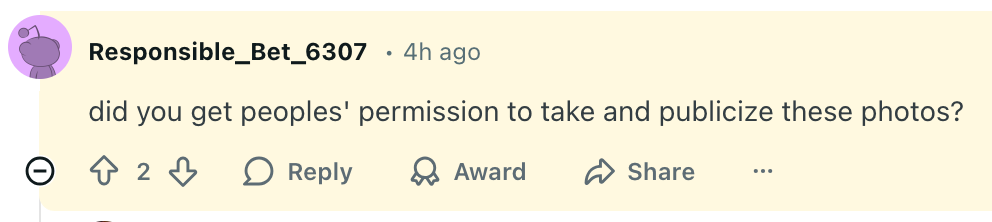
My reply started with, “Short answer: Well, no…”
This is something I’ve been thinking about a lot this year, so here’s my long answer.
I’ve attended dozens of protests and taken thousands of photos in the past few months. I’ve discovered that I’m interested in the fact that protests don’t happen in isolation; otherwise, they’d be pointless. Instead, they’re meant to be witnessed by the community. When I take photos of bystanders, I’m doing it because I want people to consider how the community felt about what they saw.
Back in August, I attended a protest that called itself All Eyes on Gaza, which was in honor of Anas al-Sharif and the other Palestinian journalists who had been assassinated. It took place outside the Fox headquarters in LA, bringing attention to the fact that these journalists were killed for trying to bring attention to a war that the media wasn’t covering responsibly.
The post included these photos:
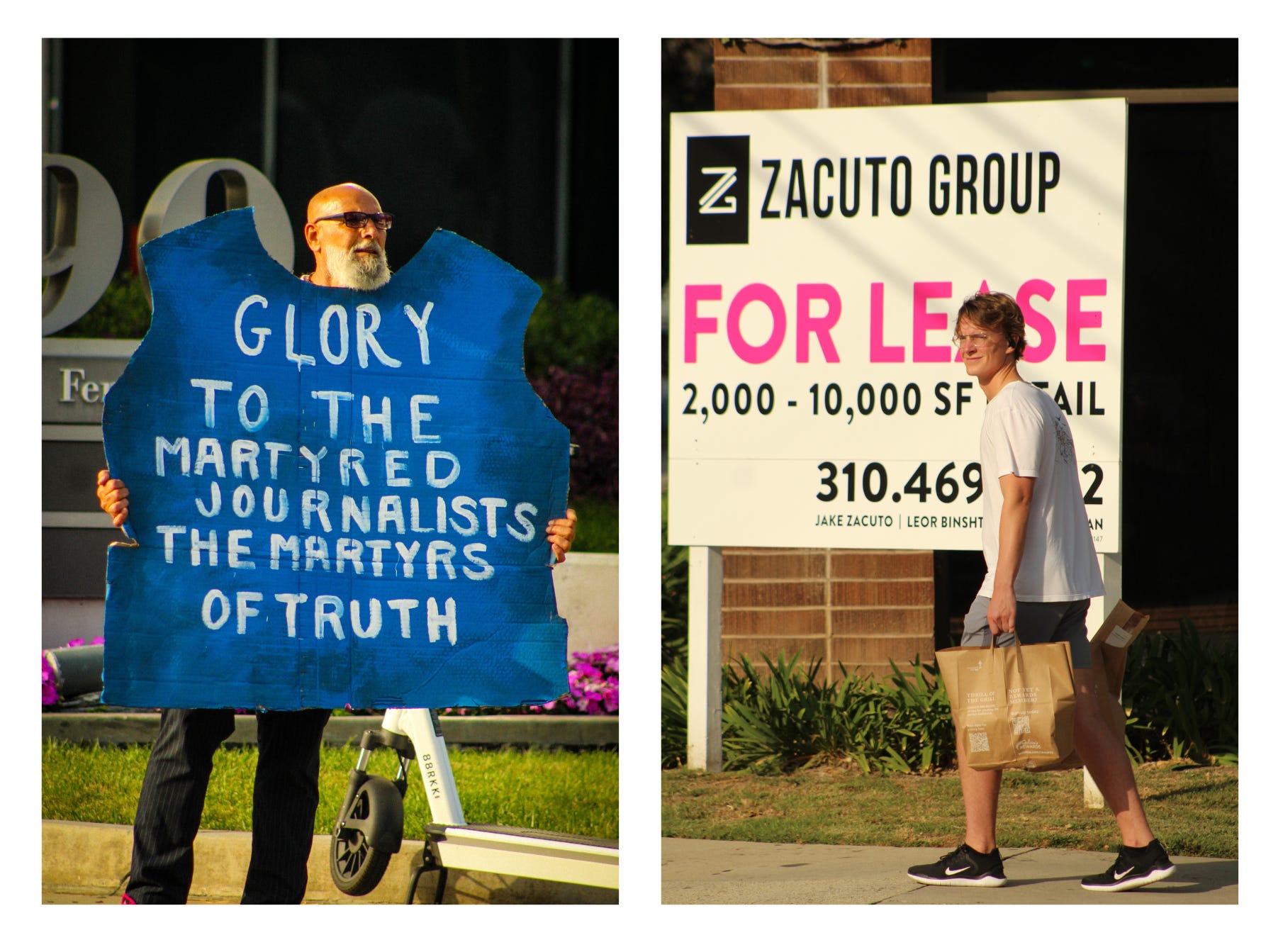
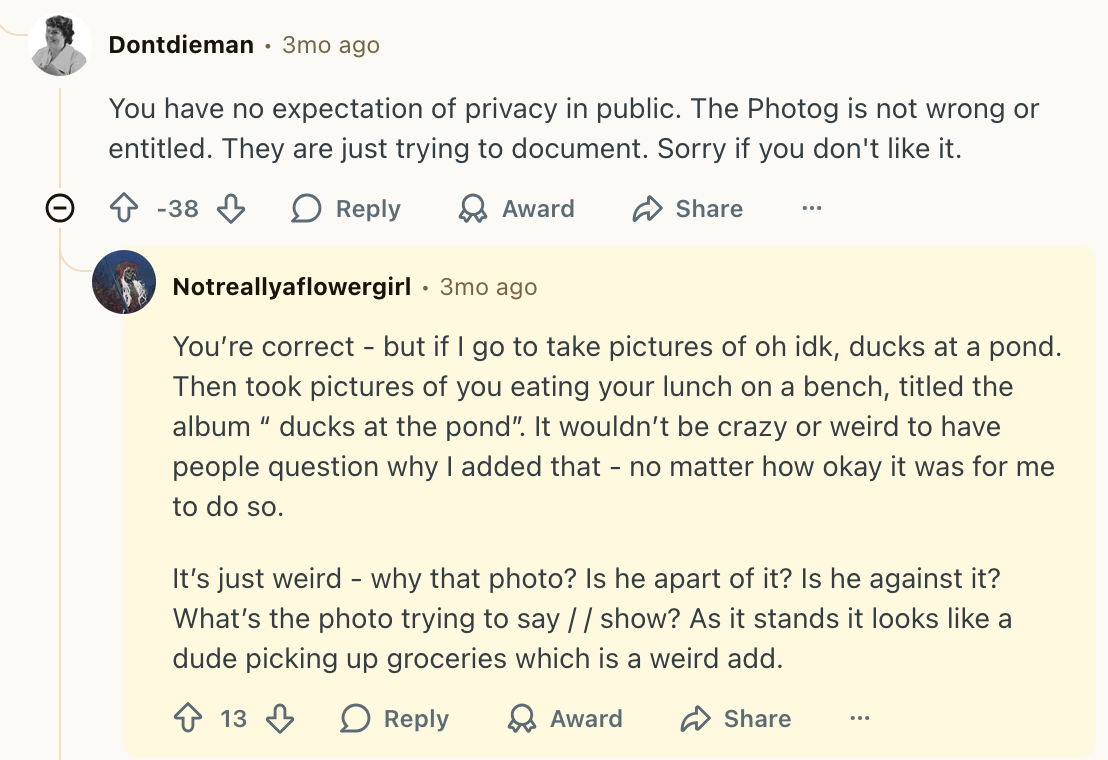
People had issues with that one. “9 photos of the protest and one of a dude just going home from the grocery store,” the top comment said, to 1.4K upvotes. The replies all talked about how “random” it was that I would include a photo of a guy who had nothing to do with the protest. If you think about it, people said, we don’t even know what he’s thinking, right? Maybe he supports the cause! Wasn’t I implicating him in America’s disinterest in the war? Isn’t that rude to do to a random person walking past?
Sorry, but…that’s what protest is.
Protest is about showing up in a physical space to disrupt the daily routine, forcing people to confront an issue face-to-face.
I am aware that we don’t know how he feels! I specifically want you to wonder how he feels!
This was a protest outside a news station, full of people asking others to pay attention to journalists who were killed for trying to get people to pay attention to a genocide. If you see that bystander photo and wonder, “Is he paying attention?” then you’ve nearly gotten the point, you just need to connect the two ideas!
That is: I want people thinking about what we owe each other when we witness someone begging us in public for our awareness of their pain! Maybe my inclusion of that photo even means I want you thinking about what I think you owe, as someone viewing those photos!
People are sometimes put off by my photos because they often include closeups of people involved — my attempt to capture emotion. People (perhaps rightly!) point out what a dangerous time this is to speak out against the government, but that feels condescending to me. They’re condescending to me as the photographer, as though I haven’t considered whether it’s worth sharing photos of these events… but that’s fine. I’m used to that at this point.
I don’t like that they’re also condescending to the protesters.
Every single person who shows up to something like this has considered the risks and has decided that being seen showing up for the cause is worthwhile.
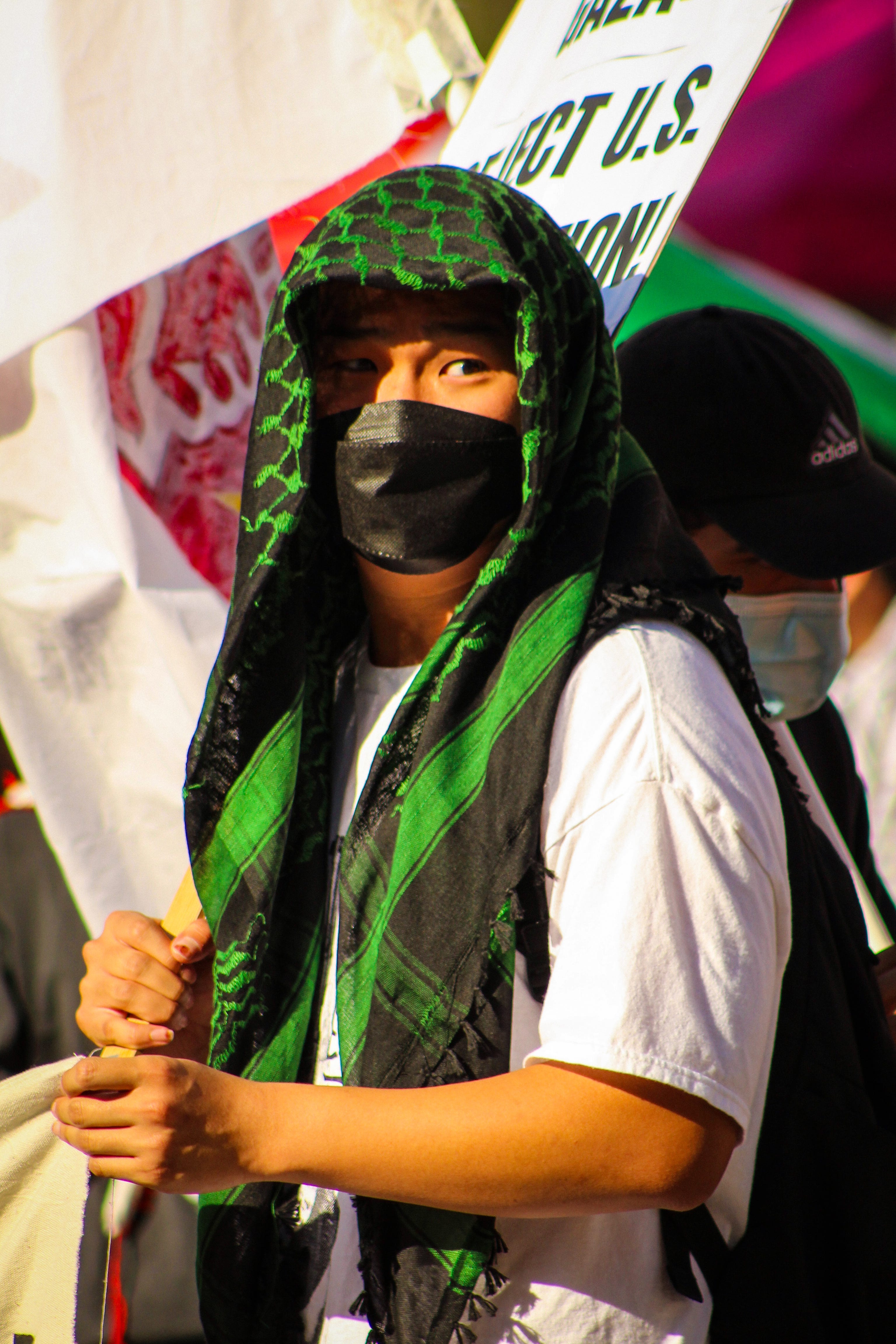
So, no, I didn’t ask this guy’s permission to take his photo. Some photographers would, and that’s totally fine! I respect it!
Personally, however, I feel that I am acknowledging this man’s agency when I assume that he was aware he would be photographed when he chose to hold a banner at the front of a protest march, facing a line of people with cameras walking backwards ahead of the protesters.
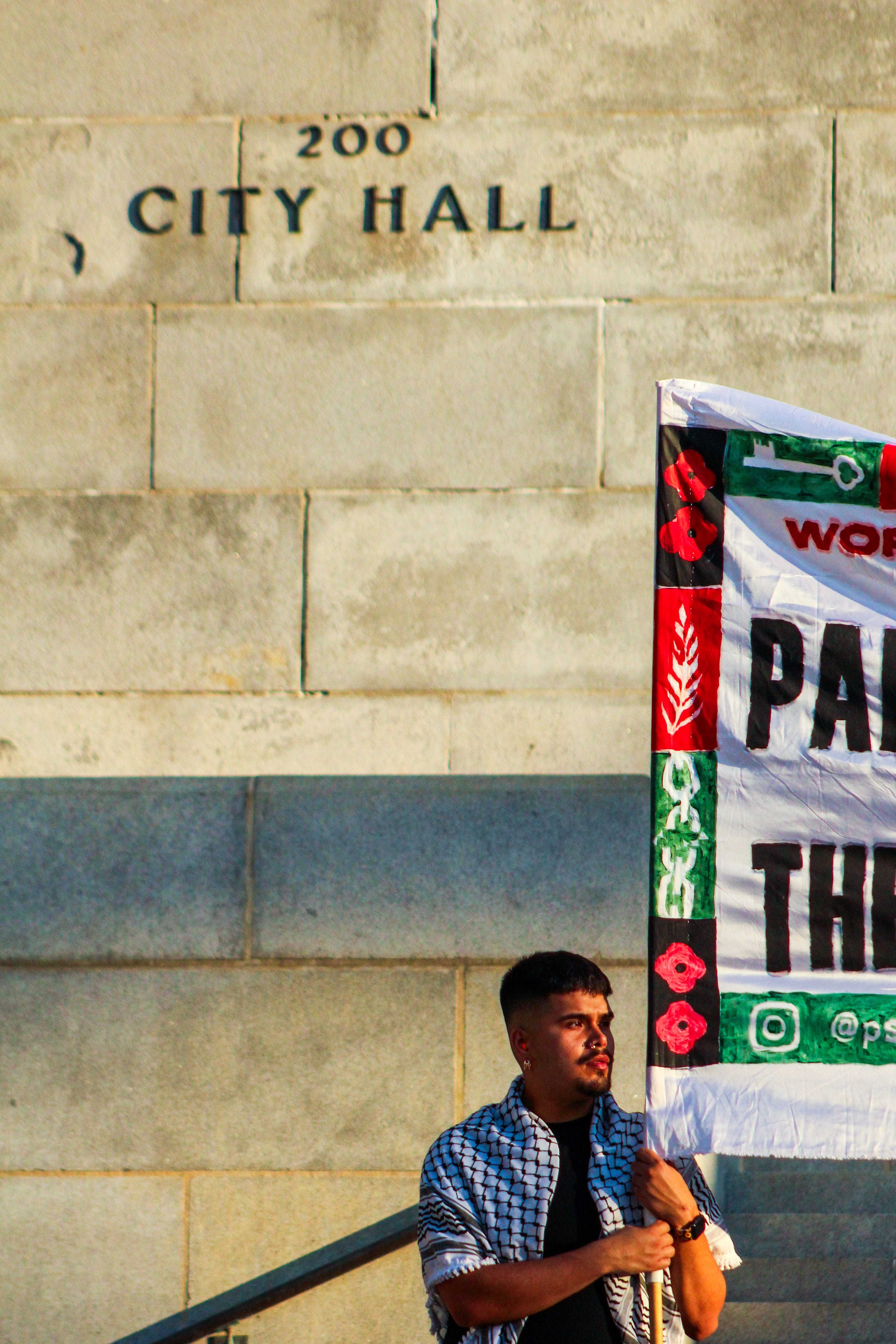
I didn’t ask this man’s permission to take his photo either, because I am assuming that when he chose to hold a banner on the steps of City Hall in Downtown Los Angeles, he too understood that he would be seen doing so… and I’m even assuming that he wanted people to see him do it.
I think those are pretty safe assumptions?
And then there are the bystanders.
The bystander question is a little trickier, but I think I can defend my position pretty easily. That is to say:
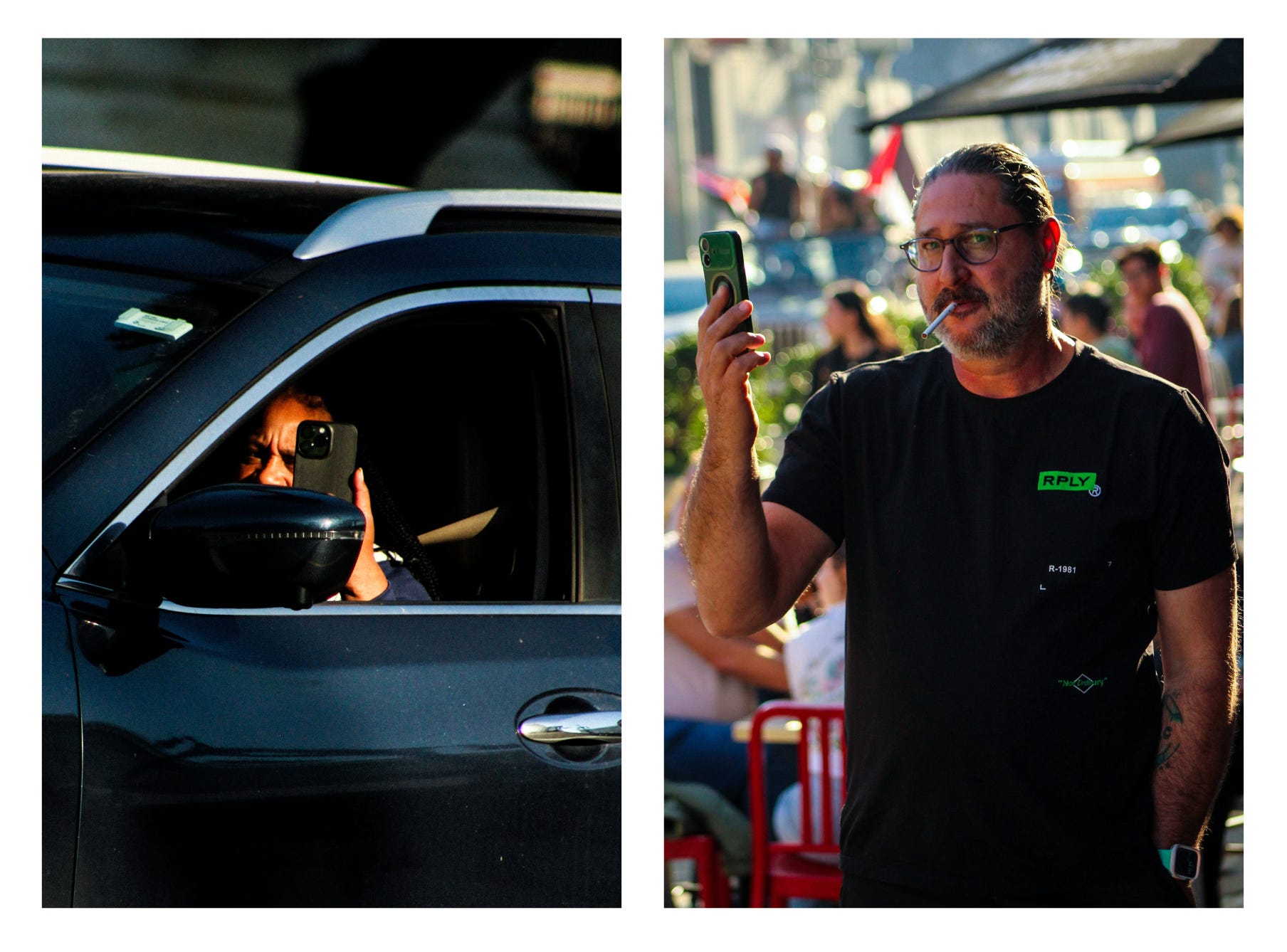
The bystanders included that Palestine post were photographing the protesters. They didn’t ask permission, either — and nor should they have. Artistic reasons for capturing “the way protests are seen” aside, we are allowed to record each other in public. It’s a simple fact: on public property, you can take photos. The First Amendment guarantees it.
That can make people uncomfortable.
David Farrier’s excellent podcast Flightless Bird did an episode this week about “First Amendment Auditors.” To my surprise, what he described on that episode was something completely different than my understanding of the concept.
Flightless Bird covered “First Amendment Auditors” who will enter a building like a public library and film themselves asking the librarian to give their full name and salary on camera. After all, librarians are government employees, making that information public record.
These guys, though, harass the employees they film. Those employees are understandably thrown by a guy shoving a camera in their face as he demands their information; then, the First Amendment Auditor posts their information online and leads harassment campaigns, resulting in phone calls demanding their firing for (supposedly) violating the auditor’s first amendment rights.
I think that’s all exploitative and it sucks and people should stop doing it!
There’s another type of First Amendment Auditors, though — another approach that I think is maybe more justifiable? It’s at least more interesting to me, especially that this type of content is popular in this particular political moment.
These other First Amendment Auditors — the ones who have shown up on my Instagram Reels page for the last few months — will grab a selfie stick, a GoPro, or some other obvious cameras, post up on a public sidewalk, and just… wait. Inevitably, people approach them, demanding to know why they’re filming.
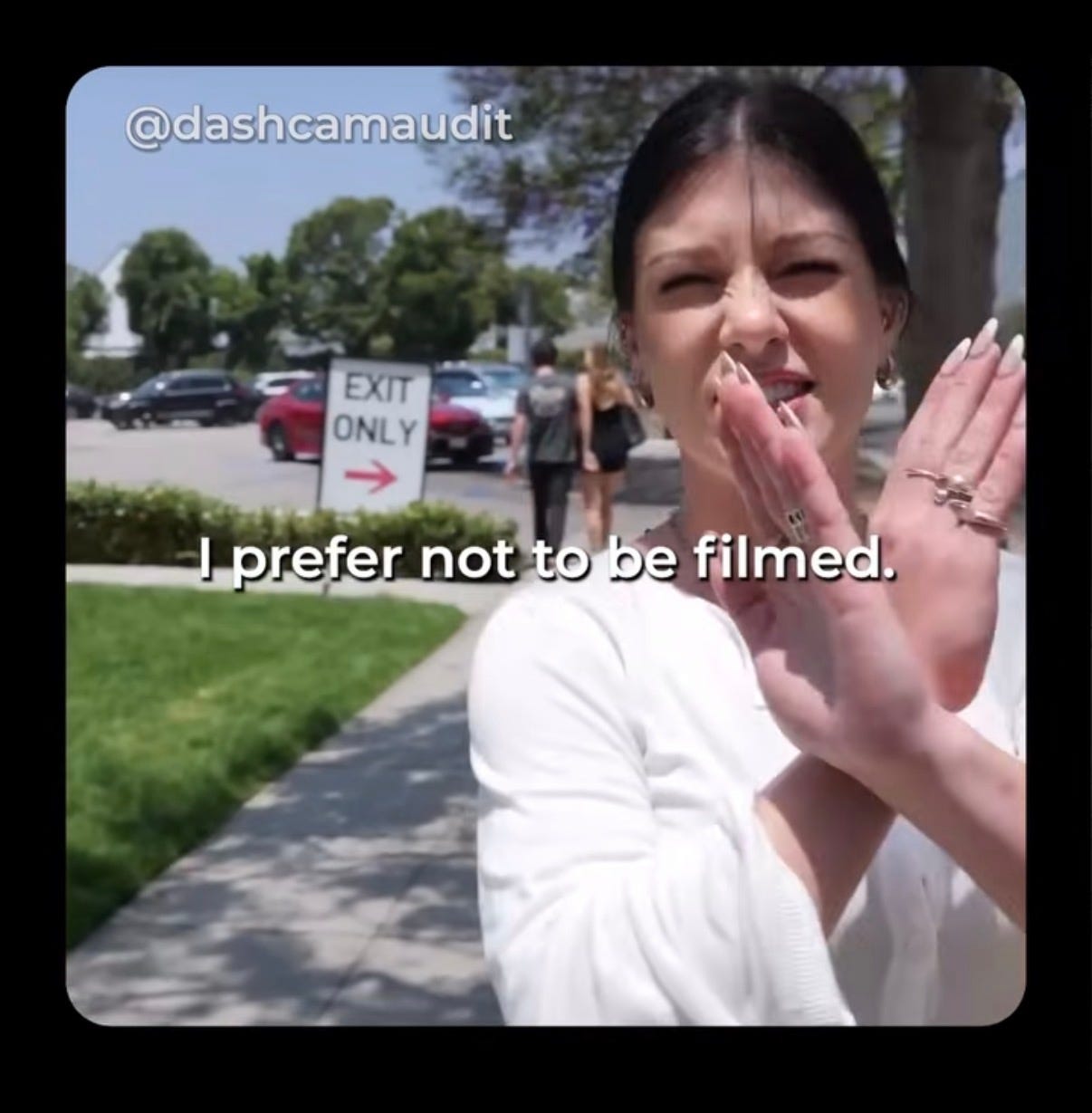
“I didn’t give you consent to film me!” they’ll say. They’re often leaning out of their car windows as they say it, often holding up their own phones to film their side of the interaction… their dashcams running… idling their cars under telephone poles that have half a dozen security cameras pointed in various directions…
“I didn’t give you consent to film me!” they’ll say.
The auditors often laugh and respond, “I didn’t give you consent to film me!”
Their brains short-circuit.
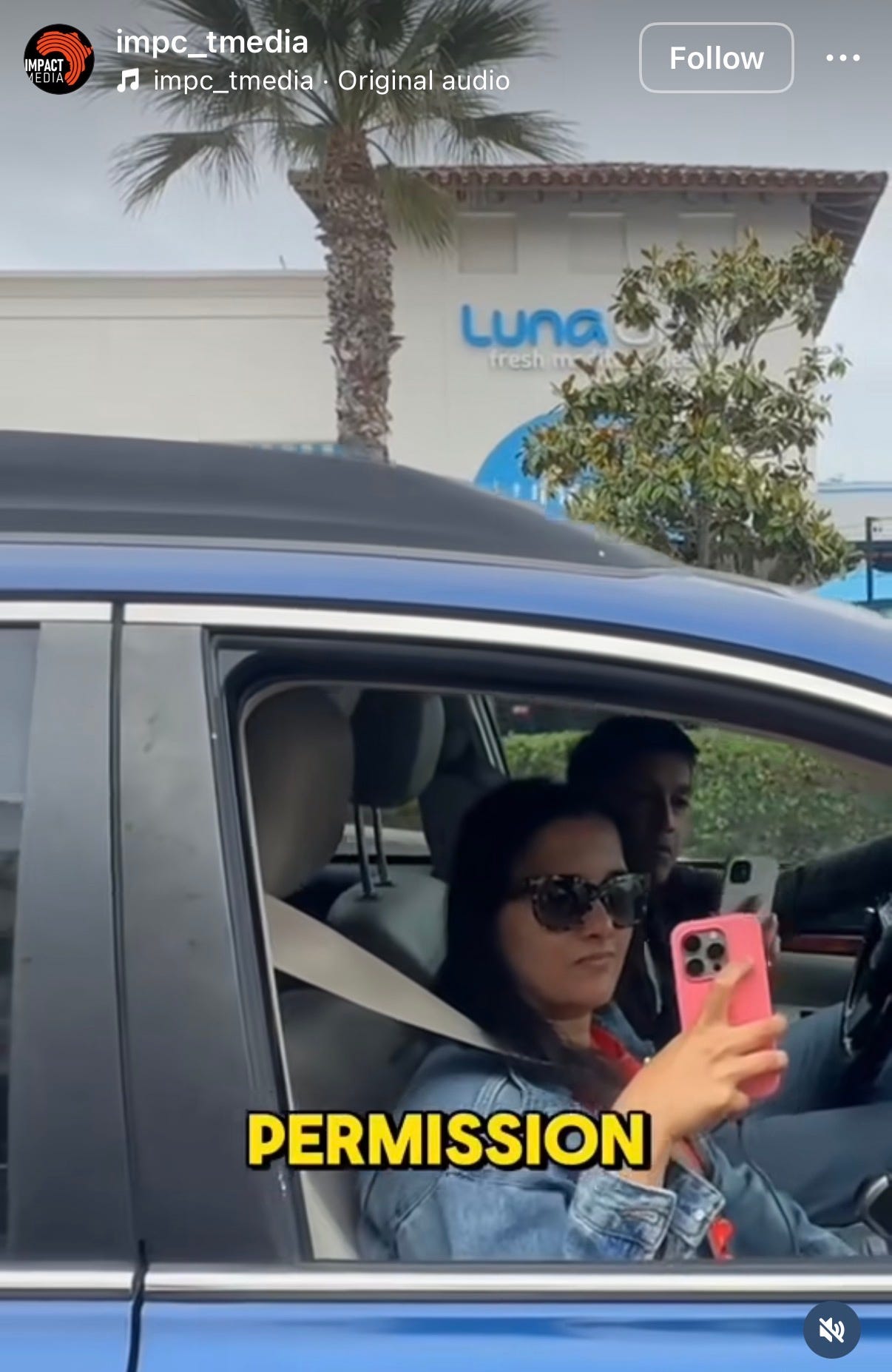
Yes, this type of #content is provocative and exploitative too; I’m not denying that. I do, however, think it’s interesting as a sort of confrontational protest. As society is currently constructed, these “auditors” are insisting, we are allowed to film in public.
I think that’s a valuable reminder, especially right now. The government has insisted that filming ICE agents amounts to “doxxing,” vowing to prosecute people who record them carrying out their kidnappings in public. That’s… crazy! “Doxxing” used to mean posting someone’s personally-identifiable information online — their name, phone number, address, etc.
It doesn’t just mean “posting a photo of someone’s face,” and ceding that definition to the authoritarian right is a dangerous path to go down.
Let’s take the next step together.
On October 3rd, I photographed a protest outside the Tesla Diner in Hollywood. My post included these photos:
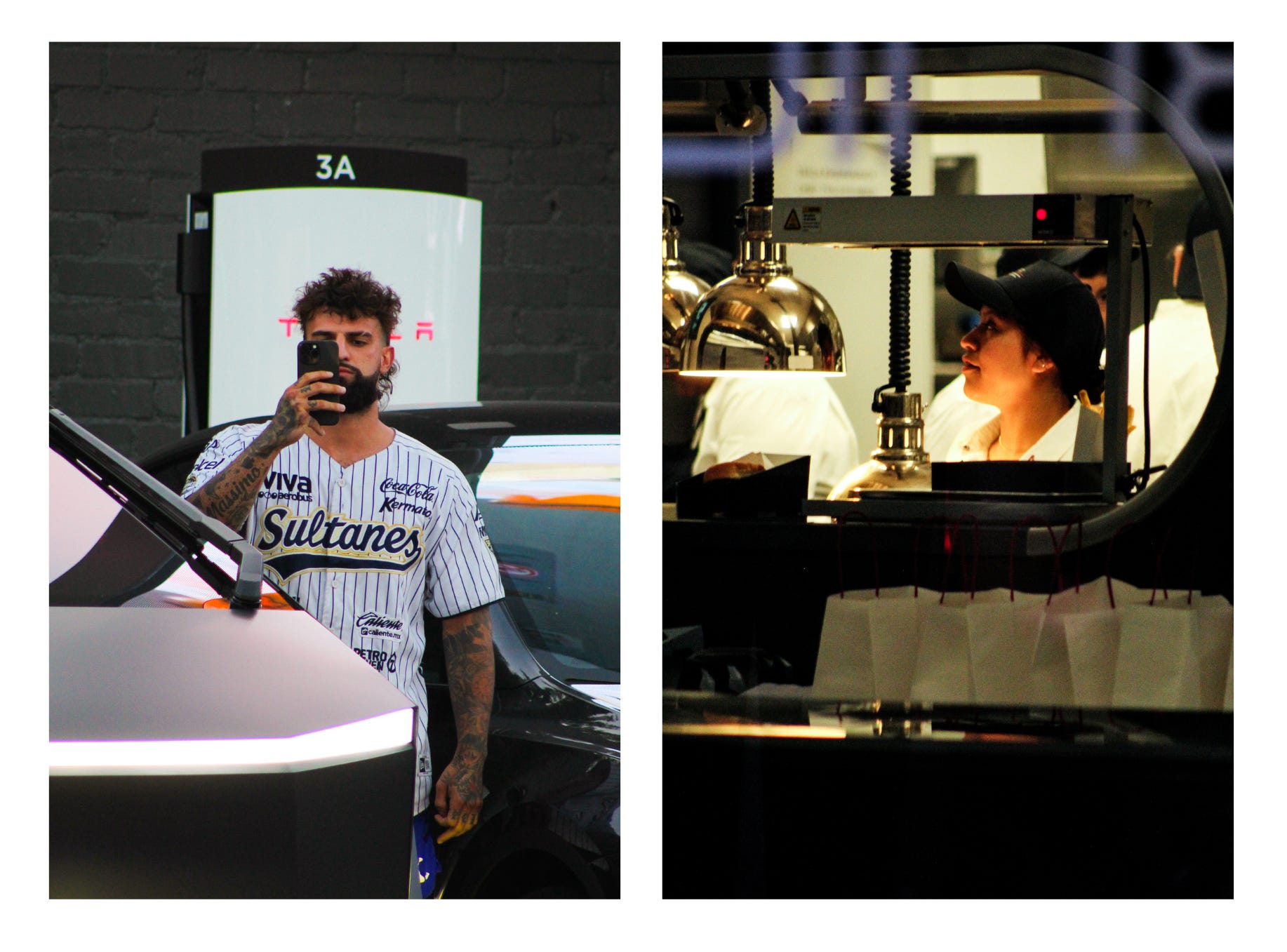
People did not like the photo of the woman working behind the counter. I’d “doxxed” her, they said, just for “doing her job.”
I simply don’t agree! My counter-argument is: we are talking about, literally, The Tesla Diner. Every single car in that packed parking lot famously records 360° around itself at all times. I don’t think I “doxxed” her any more than did every single car she walked past on her way in the door.
But I’m one identifiable human person with a camera, so it’s easier to get mad at me for taking photos of bystanders than it is to consider the massive amounts of footage that now live in a cloud storage system accessible by an unimaginably-wealthy man whose reckless disregard for empathy has killed hundreds of thousands of people this year alone.
It’s easier to demand to know why the First Amendment Auditor on the shopping plaza sidewalk is filming, than it is to wonder what all those security cameras on the light pole are doing, or where that footage goes, or what it might be used for.
When we step outside — especially in Los Angeles — we are being recorded at all times. That’s a scary thought, but it happens in the background, and we barely think about it until we need to. A guy with a camera, though, making you aware that you’re being watched as you watch a protest? He must be doing something wrong, right?
I took this photo the other night at Crescent Heights & Santa Monica, in West Hollywood.
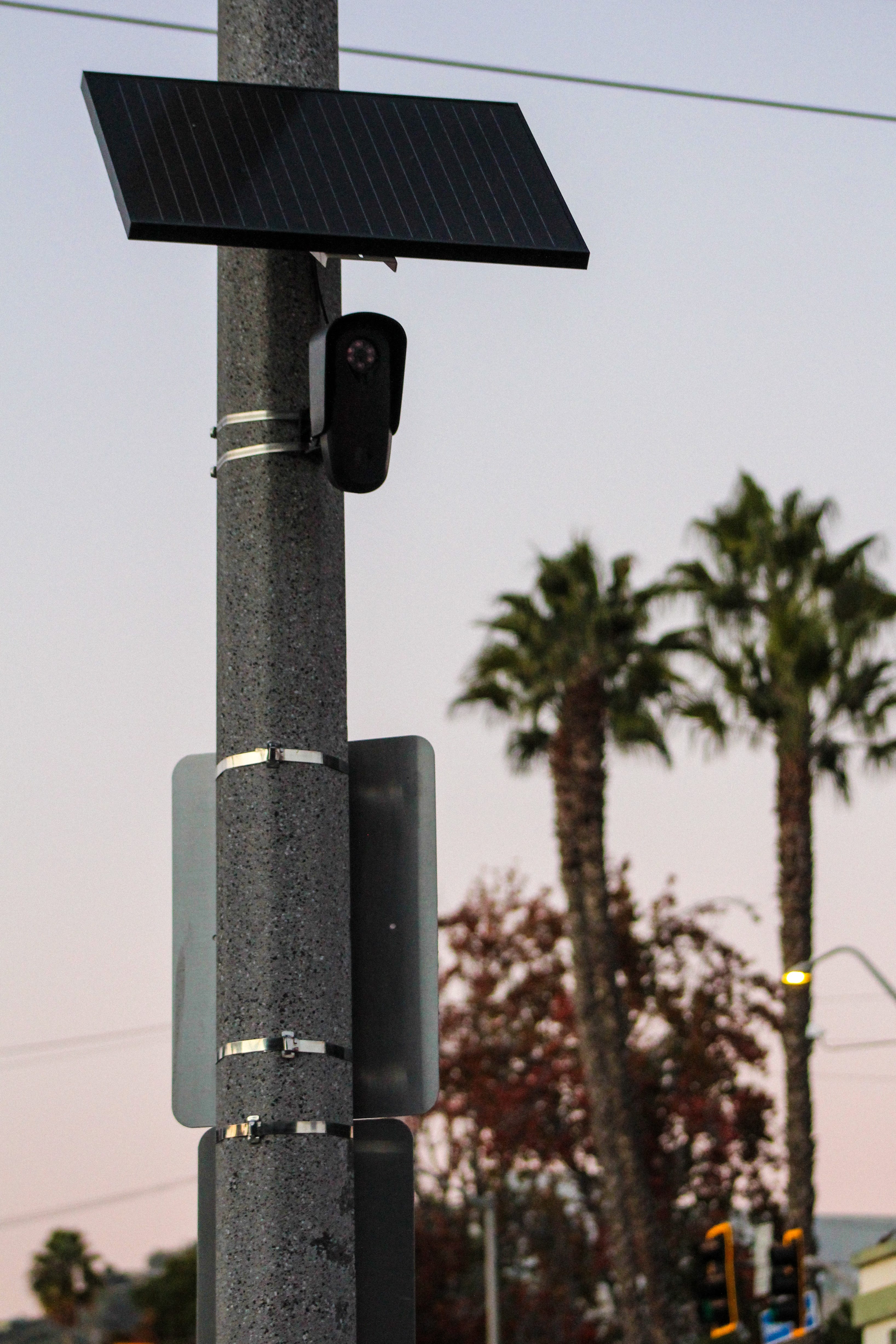
That’s a Flock Camera. They are all around the country. Thousands upon thousands of them, installed in what they claim are “5,000+ communities.” The company says they record twenty billion license plates every month, feeding that information into a vast database that law enforcement agencies and the government can use to reconstruct the precise journey of any vehicle anywhere.
They’re already misusing that access in horrifying ways.
Furthermore, Flock is now using AI to assess its own data, and these cameras are alerting law enforcement when this massive corporation’s AI thinks it’s caught you doing something wrong.
So:
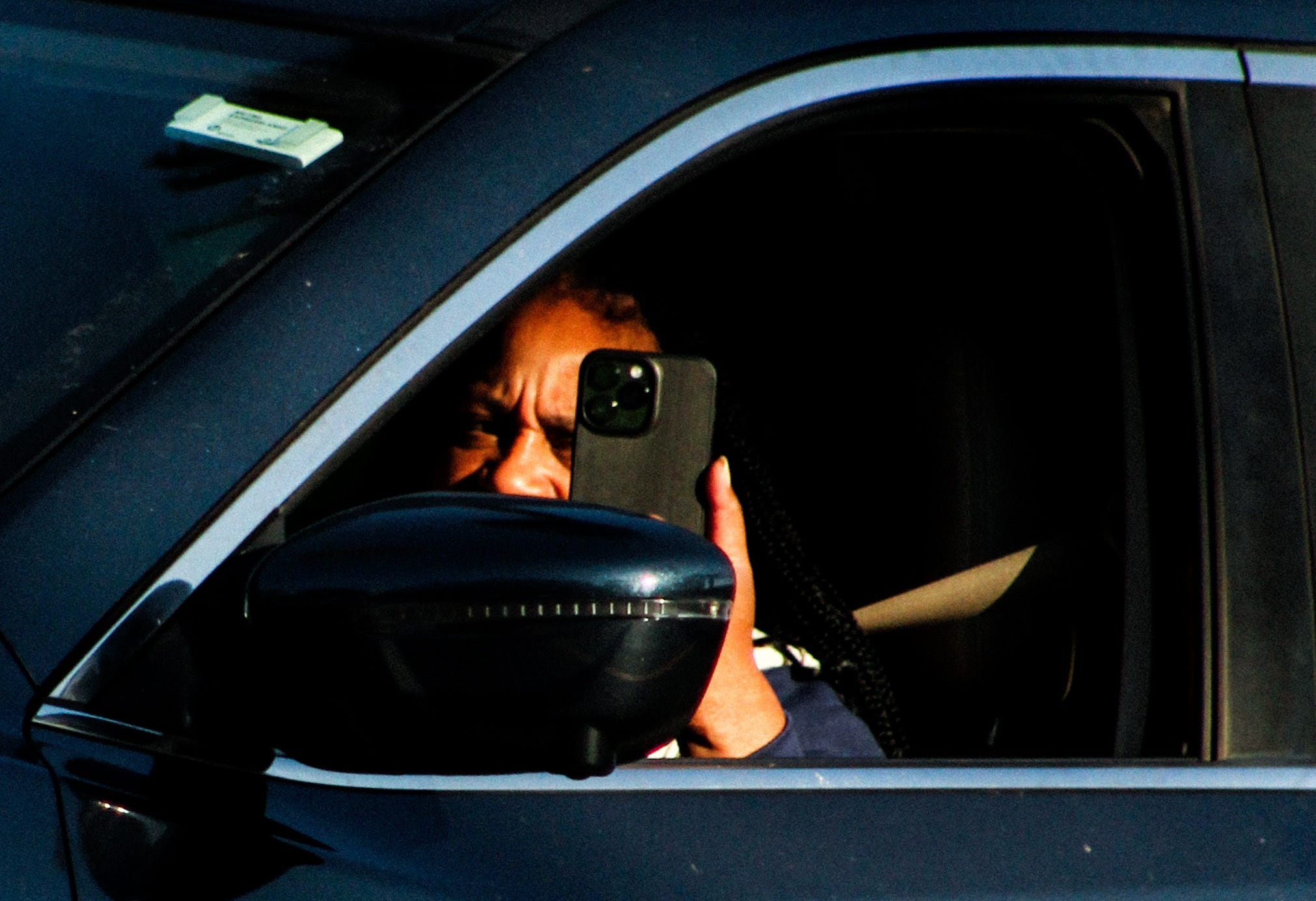
Short answer: Well, no… I didn’t ask for permission from that guy in the car before I took a photo of him recording the protest.
…But — even though they don’t need it — does Flock have your consent?
And which of us is the bigger threat?
I love this and how it's presented. So well done.
There can be no reasonable expectation of privacy in public. Full stop. The auditors movement in my opinion based on a short reading of the practice, is absurd. The example provided in this piece at the library, in my view is uncalled for behavior, interfering with the person doing their job.
If one does't want to be photographed by a journalist on the street where a protest is going on, stay away from it. Regarding the photo of the fellow passing the for lease sign carrying the bag that was included with a series of protest photos could be from anywhere. It is the viewer who must determine its relevance.