

Everything is symbolic, until it's more.
On what it means to give a protest "weight," and to turn symbolic action into meaningful change

The other day, I saw a video that made me understand my own mind more.
My whole life, I’ve been a bit overwhelmed by meaning. I grew up gay and closeted and afraid that anything I might say might give it away, might accidentally reveal to the world something that I was desperate to keep hidden.
I’d find myself getting tripped up in conversation, afraid of all of the different ways something I said could be interpreted. I didn’t want to accidentally make people angry because of a misunderstanding, or to insult them, or myself, or to accidentally lie, or to fudge the truth, and on, and on.
I focused on writing, on giving myself time to work through my thoughts, to order them in a way that hopefully accounted for all possible misunderstandings, so that I would be hopefully understood.
Here’s physicist Richard Feynman trying to wrap his mind around the question of why magnets do, y’know, that.
I was diagnosed with ADHD last summer, just as all of the protests in LA kicked off. I don’t think I would’ve been able to do what I’ve been doing — to wrap my mind around the awe-inspiring meaning of what I’ve witnessed — without finally getting that ADHD under control.
Because now I understand that I’ve been frustrated and fascinated by the reaction to my photos for the same reasons Feynman unpacks in that clip.
“You have to know what it is that you’re permitted to understand, and allow to be understood and known, and what it is you’re not,” he says.
We can’t have a conversation if I don’t know what you know, and what we can agree that I know too.
That’s precisely where Internet discourse fails us in this moment.
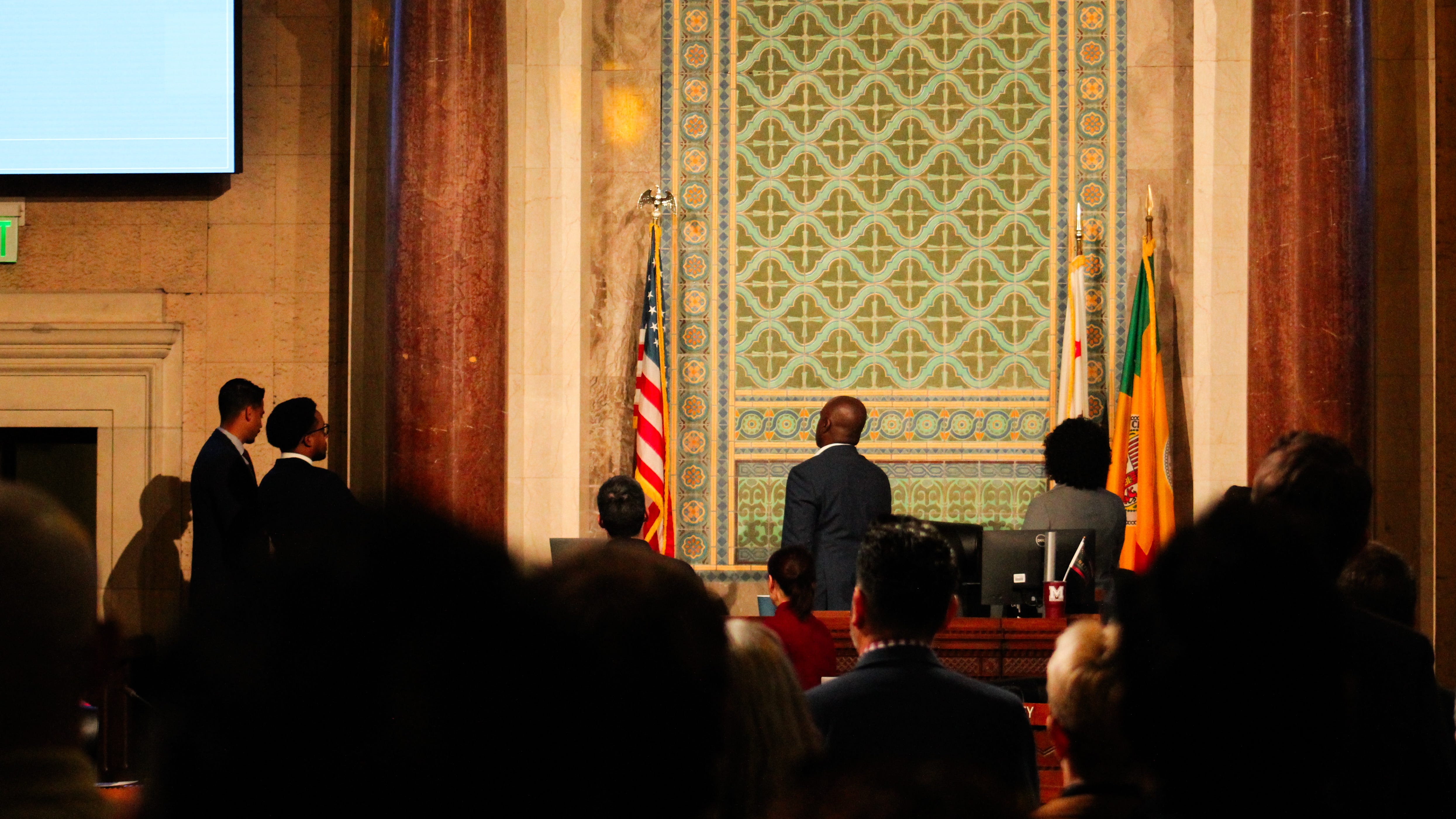
On Friday, I spoke to the Los Angeles City Council.
I wrote about this in the immediate aftermath, but I hadn’t realized how much Friday’s images would resonate online. They’ve currently been viewed 11.5 million times on Reddit, and I’ve seen people discussing the man in the swastika hoodie at the LA City Council meeting on other social media sites, too.
I also linked people to my comments to the council, and some people responded to my speech, which was about the way that being a photographer gives me insight into the difference between symbolic actions and ones that have more material meaning.
Councilmember Monica Rodriguez had kicked off the meeting by promising that, as it relates to the council’s inaction around ICE and LAPD misconduct, “the gloves are off” this year. I said I appreciated that, because a moment earlier I’d been struck by the visual metaphor of the council turning their back on the public to pledge their allegiance to the federal government.
I said I hoped that they backed up their promises with action. “Show me that I’ve misinterpreted,” I said.
Some commenters took issue with that, and I think one particular exchange is instructive.
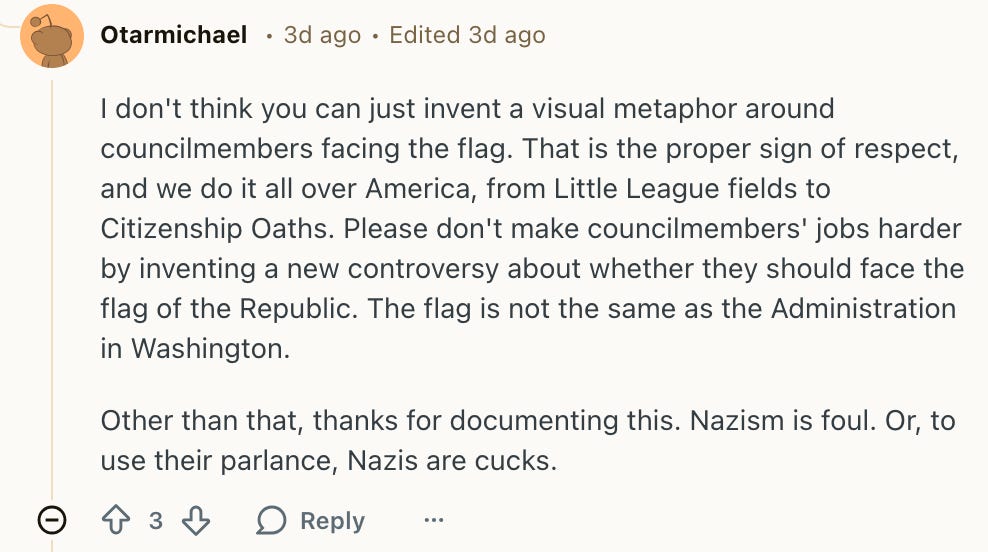
As Feynman would say, what am I permitted to understand in this comment, and to allow to be understood?
“That is the proper sign of respect,” this person says.
The use of the word “sign” indicates that this person knows, on some level, that this is a chiefly-symbolic act.
Calling it the “proper” symbolic act means that it’s the socially-acceptable thing to do.
Saying it shows “respect” relies on even more assumptions about what has been socially-conditioned into us.
Why does the flag deserve “respect?” Why does looking at this piece of fabric convey your “respect?” What does your “respect” even mean, if you are not backing up that pledge of allegiance with actions that support the ideals it’s supposed to (literally and metaphorically) stand for?
(Which was my point to the council?)
I tried pointing this out, noting that “turning your back on someone” is widely-understood as a sign of disrespect.
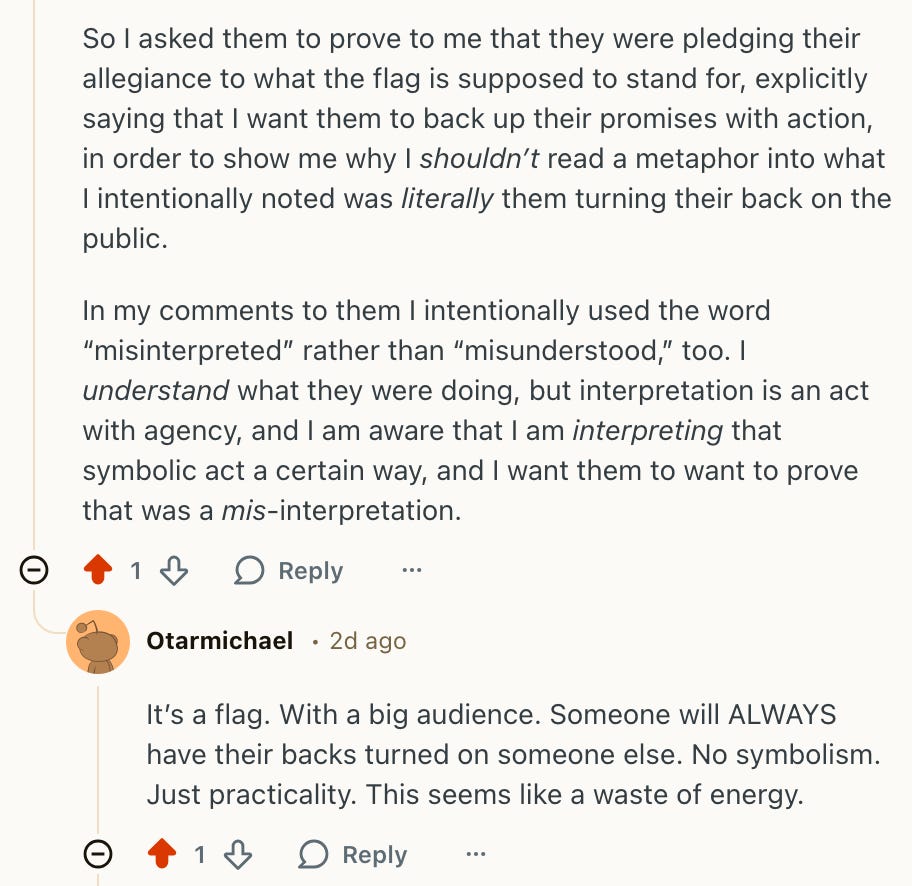
“It’s a flag … No symbolism. Just practicality.”
We’ve reached what I wrote about in Webworm last year — not just an indication of different understandings of the world, but a denial that there is anything about the world worth trying to understand.
“No symbolism,” in the act of facing a piece of fabric, placing our hands on our hearts, and reciting words we’ve been taught signal our devotion to not just the country as it exists, but the the underlying ideals for which it stands?
No symbolism?
There’s no meaning to it; they’re just facing the flag to show their respect. Why do we “face the flag” to show our respect? It’s a gesture that indicates — yes, even in large crowds, where someone will always turn their back on someone else — that the flag is the most important thing in the room. That act is meant to convey something about the level of respect you’re giving the various elements of the room: the flag gets your undivided attention, and everything else is correspondingly diminished.
That’s… the point.
And I asked City Council to show me that I misinterpreted their intent. I purposely didn’t say “misunderstood.” I understand what they were doing, but in reading into them turning their backs on the public, I am performing an act of interpretation that I am hoping will make them act to prove me incorrect.
“It’s the proper sign of respect” is an act of interpretation, too, an act of decoding those symbols and deciding you agree with what they represent. I was intentionally trying to destabilize that act, to question why we accept the metaphorical significance of certain elements of it and ignore others.
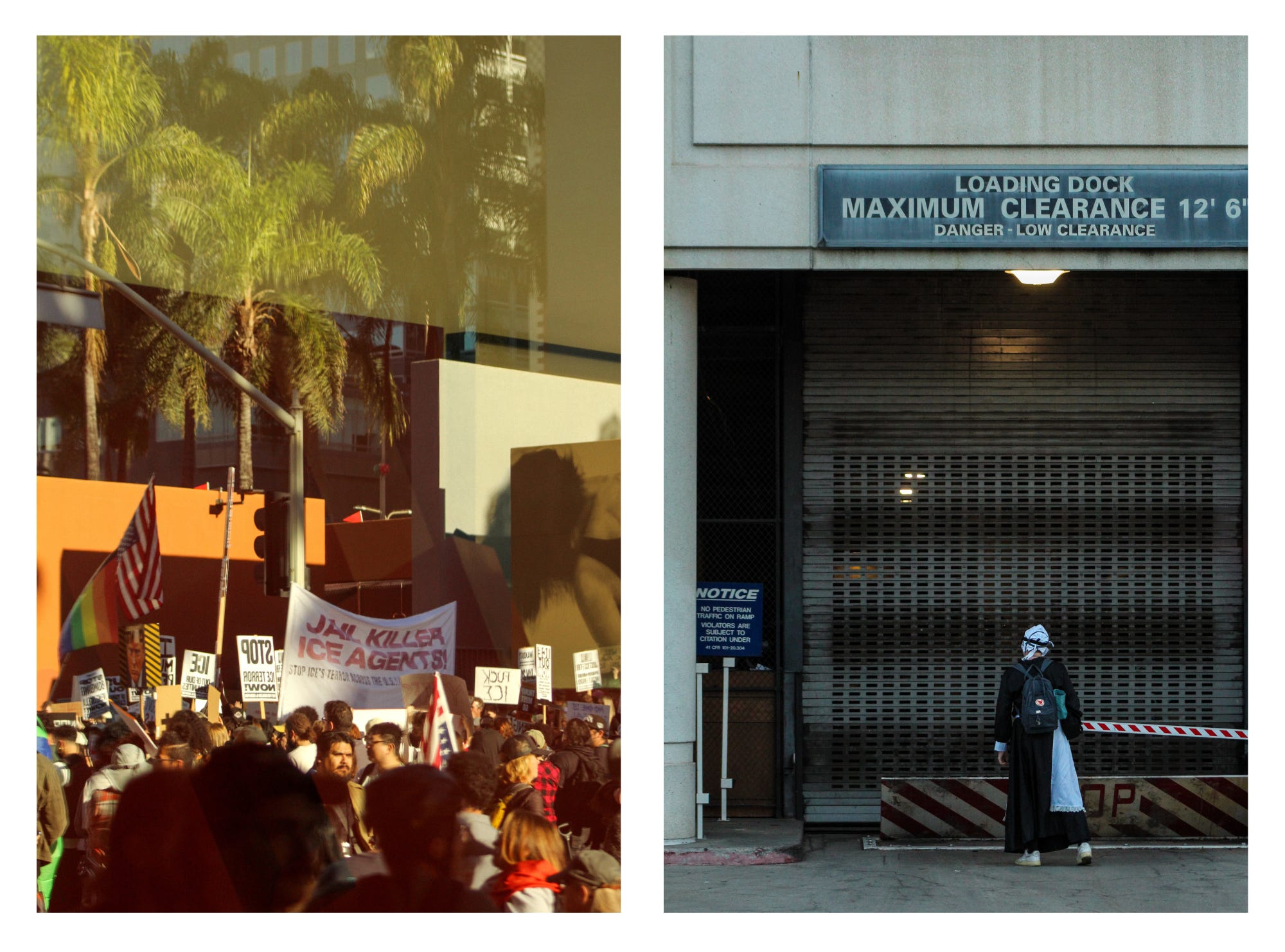
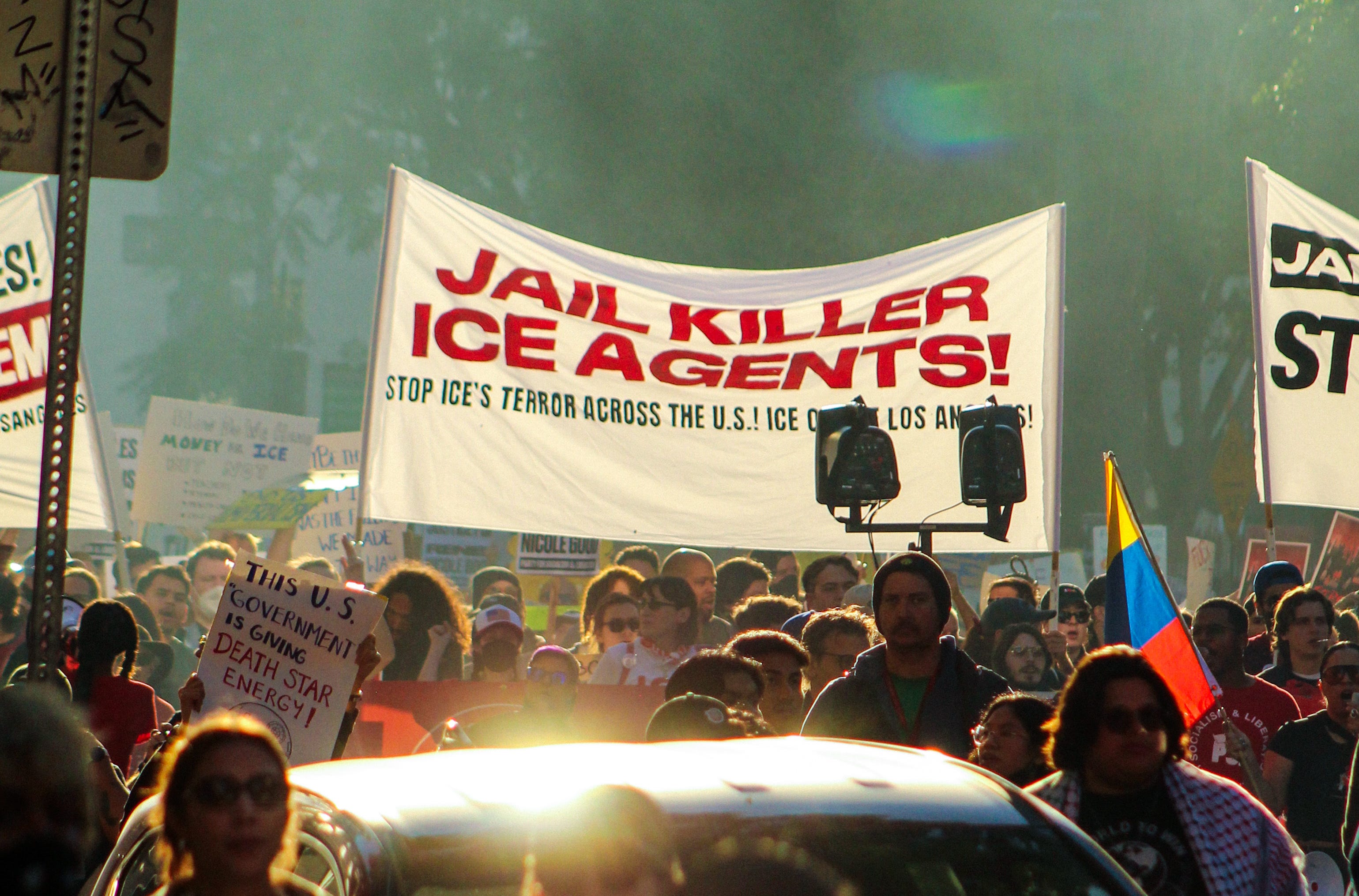
On Saturday, thousands of people took to the streets of Los Angeles for a loose collection of events organized online under the title ICE OUT FOR GOOD. It’s ostensibly part of a nationwide action in honor of Renee Good — “GOOD” representing her name but also getting ICE out permanently. Here in LA we also march for Keith Porter, and by extension for all victims, these two serving as symbols for the fascist power differential writ large. It also happened in the same place and at the same time as an action planned around the seizure of Venezuela, and so it wound up being a sort of catch-all protest, a demand that this all needs to END, and it needs to end NOW.
It was full of symbolism, everywhere I looked, and I kept thinking of that person saying there was “no symbolism” in the act of saluting the flag.
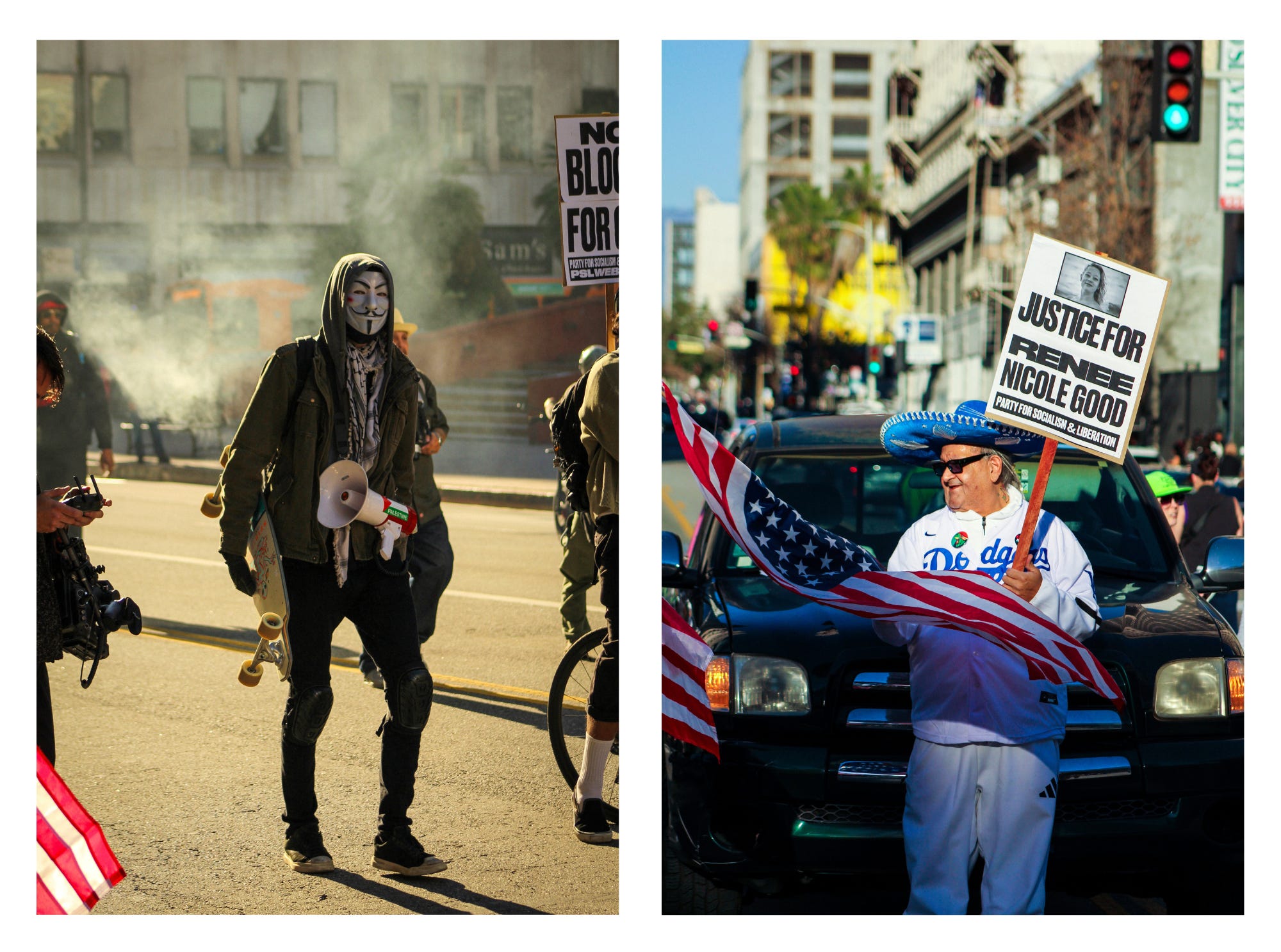
You could say these protesters “just dressed in costumes.”
But for me, the photo on the left depicts someone with:
A Guy Fawkes mask
A longboard
A keffiyeh
Kneepads
A megaphone
with a Free Palestine sticker on it
And the photo on the right depicts someone with:
A Dodgers shirt
A sombrero
An upside-down American Flag
A sign reading Justice for Renee Good [Party for Socialism & Liberation]
A button emblazoned HOP, showing a frog wrapped in an American Flag [in the style of Shepard Fairey’s HOPE poster from the 2008 Obama campaign]
Furthermore, he’s placed himself in the path of a truck, and he’s happily laughing.
When those people got dressed, they were engaged in acts of meaning-making. Each of those elements about both of those protesters symbolizes something, signifies something, indicates something about who they are, what they believe, why they’ve shown up in this space, and what kind of space they expect it to become because of their presence.
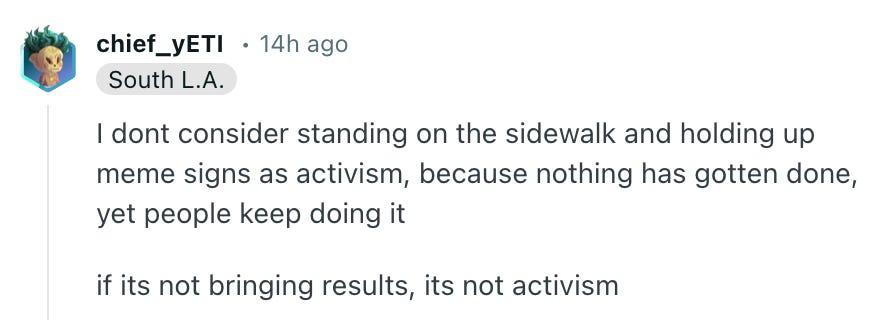
Or you could say that showing up like that was “meaningless” because ICE still exists.
How do you counter a sentiment like that?
What am I allowed to understand to be true, before I can begin to unpack why I disagree?
“its not bringing results.”
First, we seem to disagree about what “it” is. I have firsthand knowledge that a lot more than “standing on the sidewalk and holding up meme signs” has “gotten done.” (And, how are we defining what it means for something to be “done?”)
Second, we seem to disagree about the meaning of “results.” This person seems to be using “its not bringing results” to mean “ICE still exists,” which, y’know, is correct. Sure.
But that doesn’t mean “standing on the sidewalk and holding up meme signs” has had no result, and if we reject the framing that that’s all that has happened, that nothing has “gotten done” since things kicked off in early June.
Here’s what those early days looked like at the Metro Detention Center:
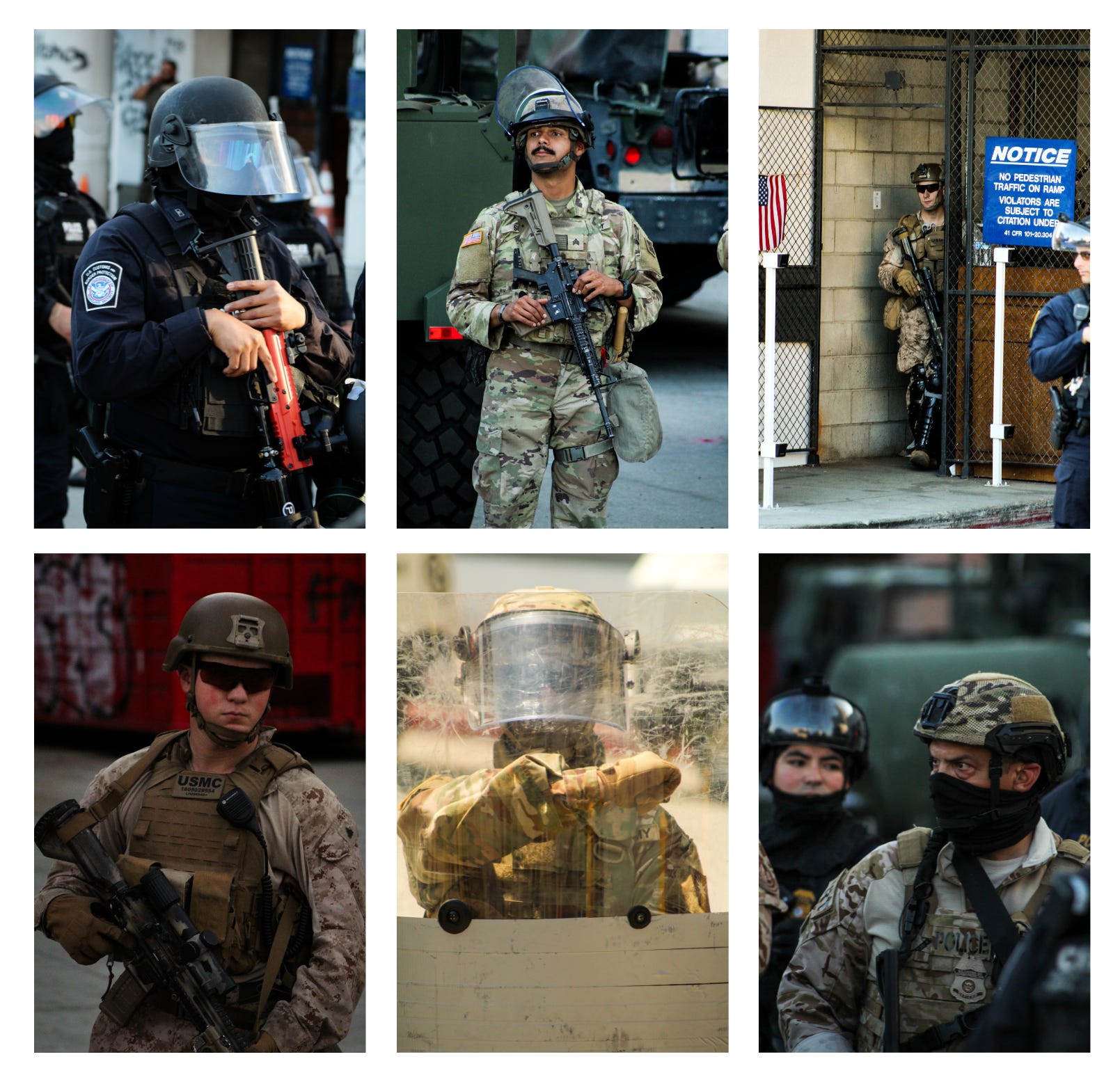
Here’s what it looked like on Saturday night:
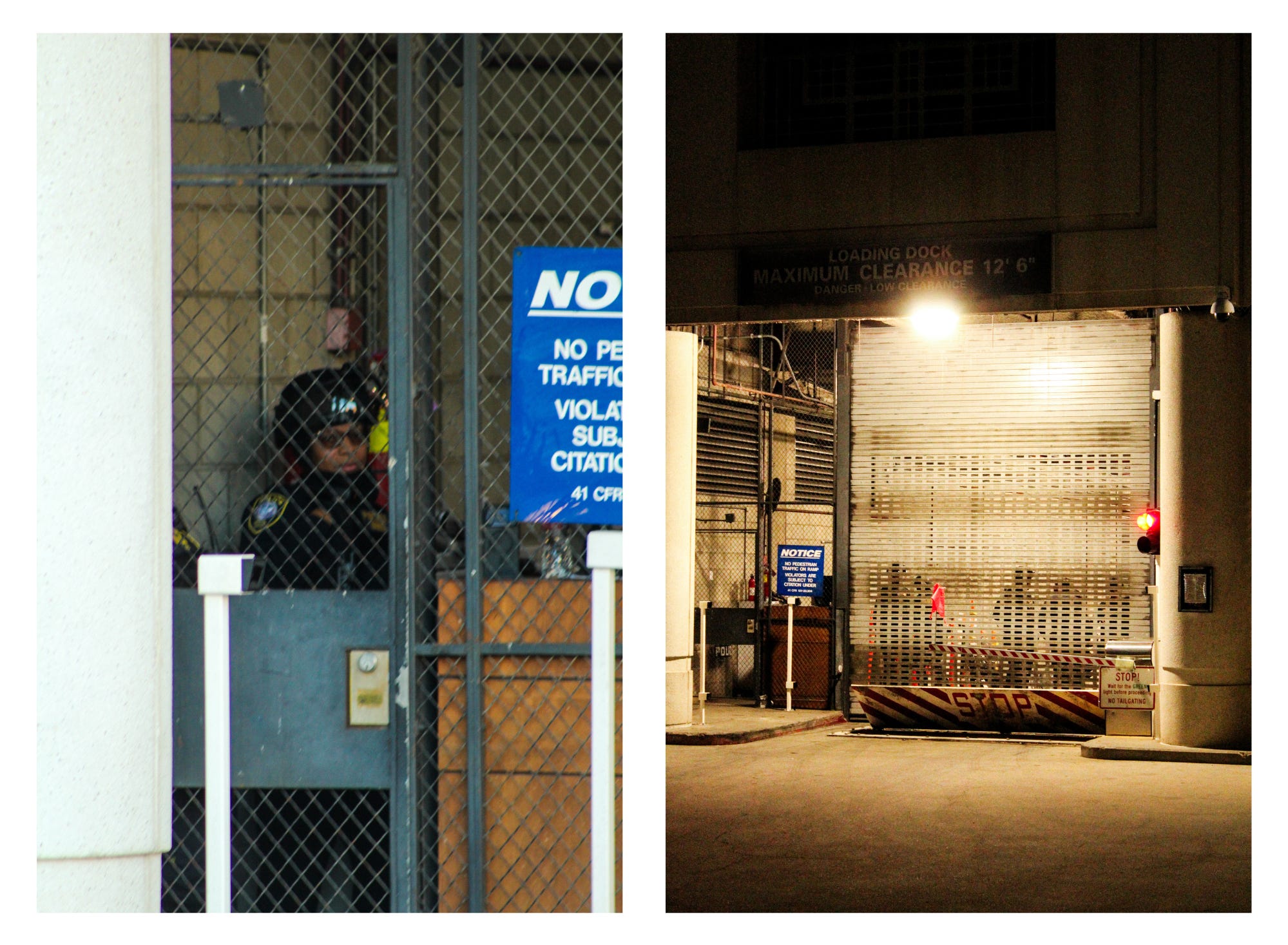
That difference, to me, is remarkable. It took my breath away when I got to that block, to be frank. Seeing that driveway empty — rather than being full of people in six types of armor holding half a dozen types of guns — felt like a major victory. A few months ago, the whole block would’ve been roped off by LAPD in advance and they would’ve joined DHS in tear-gassing the crowd.
It’s not the “result,” in the sense that, yes, ICE still exists and is still doing horrific things in that building.
But the Marines have left, and the National Guard troops that Trump seized have left, and because so many LA protesters risked violent retaliation every single night for months, people in other cities followed our example, and thanks to the people of Chicago, the Department of Homeland Security are no longer allowed to use crowd control weapons. The LAPD embarrassed themselves by going to court to argue that they should be allowed to shoot more journalists, an assertion so absurdly contrary to American values that there are more eyes on police misconduct than were paying attention before. A resulting attempt by the LA City Council to limit the LAPD’s use of crowd-control munitions failed, but that debate led LAPD Chief Jim McDonnell to openly object to the way the law says his police force are supposed to be using those weapons. Protesters will make sure that answer is going to affect the LAPD’s current ask for millions more in funding, and on and on.
Everything has not “gotten done,” but some things have indeed been accomplished.
It’s important we recognize that.
That all being said, I had to stop and stare at this guy for a while.
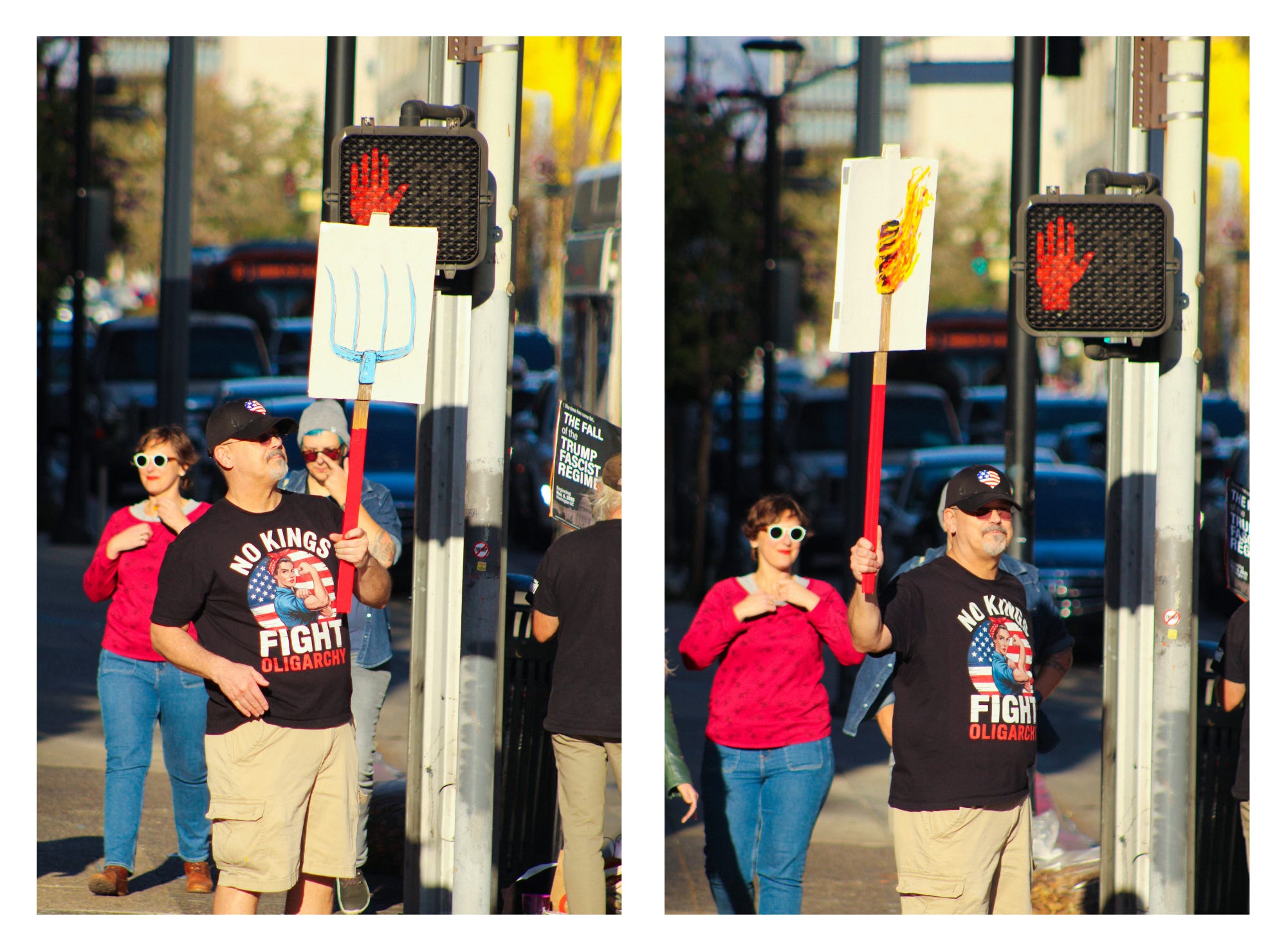
I don’t really understand what Rosie the Riveter represents on his shirt, other than as a watering-down of that symbol’s original meaning about joining the war effort. On the shirt, she wants us to join her in “Fighting Oligarchy,” which is great, but Rosie the Riveter was specifically a symbol for turning your symbolic allegiance into material action — by signing up to work in a factory.
This guy, however, has paired it with a two-sided sign. On one side, there’s an image of a pitchfork; on the other, a torch.
Pitchforks and torches are symbols, too, but they’re symbols that have weight because they are tools with very clear, actionable uses. When carried aloft by a mob, the implication is clear — we will stab you and/or light you on fire if you don’t listen to us.
It struck me there that, by turning an object into a 2D representation of that object, this guy has quite literally flattened the meaning of what it means to carry a pitchfork. It’s probably much lighter than a pitchfork, too; in lessening both its literal and symbolic weight, he’s emptied it of its implicit potential to escalate.
It wasn’t lost on me that his shirt also says “NO KINGS,” a slogan that represents an organization that has been dismissed by both the left and right for its performative focus on nonviolence — exactly the kind of people “standing on the sidewalk carrying meme signs” that the commenter above used to discredit and dismiss the entire movement. By starting with “we are committed to nonviolence” — by exchanging your pitchfork for a sign that simply depicts a pitchfork — this guy seems to be signaling first and foremost, “I am only a symbolic threat.”
Or: don’t worry, I am simply performing what it means to protest.
That’s a bummer.
Still, though: this guy left his home and went out in public, showing up in support of people who are demanding literal — not symbolic — change. Maybe Rosie the Riveter is an apt symbol after all: nowadays, we’re not all “joining the war effort” by working in factories to make the planes that’ll drop the bombs, but this guy joined the effort by showing up to add to the crowd, becoming one more person in the mass of people that moved across the city in numbers too big to ignore.
It’s that guy’s symbolism-first, little old me? I’m just a symbol! symbols don’t have meaning, right? there’s no symbolism involved in saluting the flag! presence that can form a literal barrier. There were so many people that the cops didn’t stop the march this time — an actual, physical result coming from that “fear me not, I’m only symbolic!” action.
I nearly cried twice the other night, both at moments where I found myself kind of awed by the merging of the symbolic and literal power of what I was seeing.
First: a man wrapped in a red, white, black, and green shawl stepped onto the Metro Detention Center driveway. He drank from a tallboy can as he advanced, walking slowly, just staring up at the concrete building before him. Shadowy agents of the state stood behind the gate; their forms seemed uneasy, shifting their weight, as if wondering how far he would push, how far he was willing to go.
I mean that both literally and symbolically. As I watched, I wondered how far forward was he willing to walk, but also, how far was he about to push the symbolism of what he was doing?
There’s the literal act of stepping onto a piece of pavement you’re not supposed to be on. But — Richard Feynman would ask — why do we all just take it as a given that you’re not supposed to be there? If he were to have gotten shot for it, some people would understand it as a given that he deserved it… but why? Why are people allowed to kill you for standing on certain pieces of concrete? How far down in the rabbit-hole of meaning must we go before we can agree on the terms of the conversation we’re having?
What layers of meaning, both literal and symbolic, are we assuming we share when we are asked to make the leap in understanding from “woman drives truck near man” to “Renee Good was a violent domestic terrorist who deserved to be shot in the face?”
That man’s physical presence on the MDC driveway was only a threat inasmuch as we understand what it symbolically represents. He’s literally one person walking out of the crowd, slowly heading toward the people who have the weapons. Clothed in colors that surely represent something to him, his action becomes about the fact that there are people willing to endanger themselves to hopefully better the future of others. The literal pavement being kept empty is also a symbol for “the function of the federal government continuing without interruption,” and by standing on that pavement you interrupt its ability to mean what they want it to mean.
And then there’s the fact that he knew full well he was doing it to be seen doing it. Plenty of photographers followed him onto the driveway, crowding around, jockeying for great shots. Plenty of them got great shots, too, including this one from Carrie Schreck, a.k.a. rehabforcandy on Instagram. Follow her!
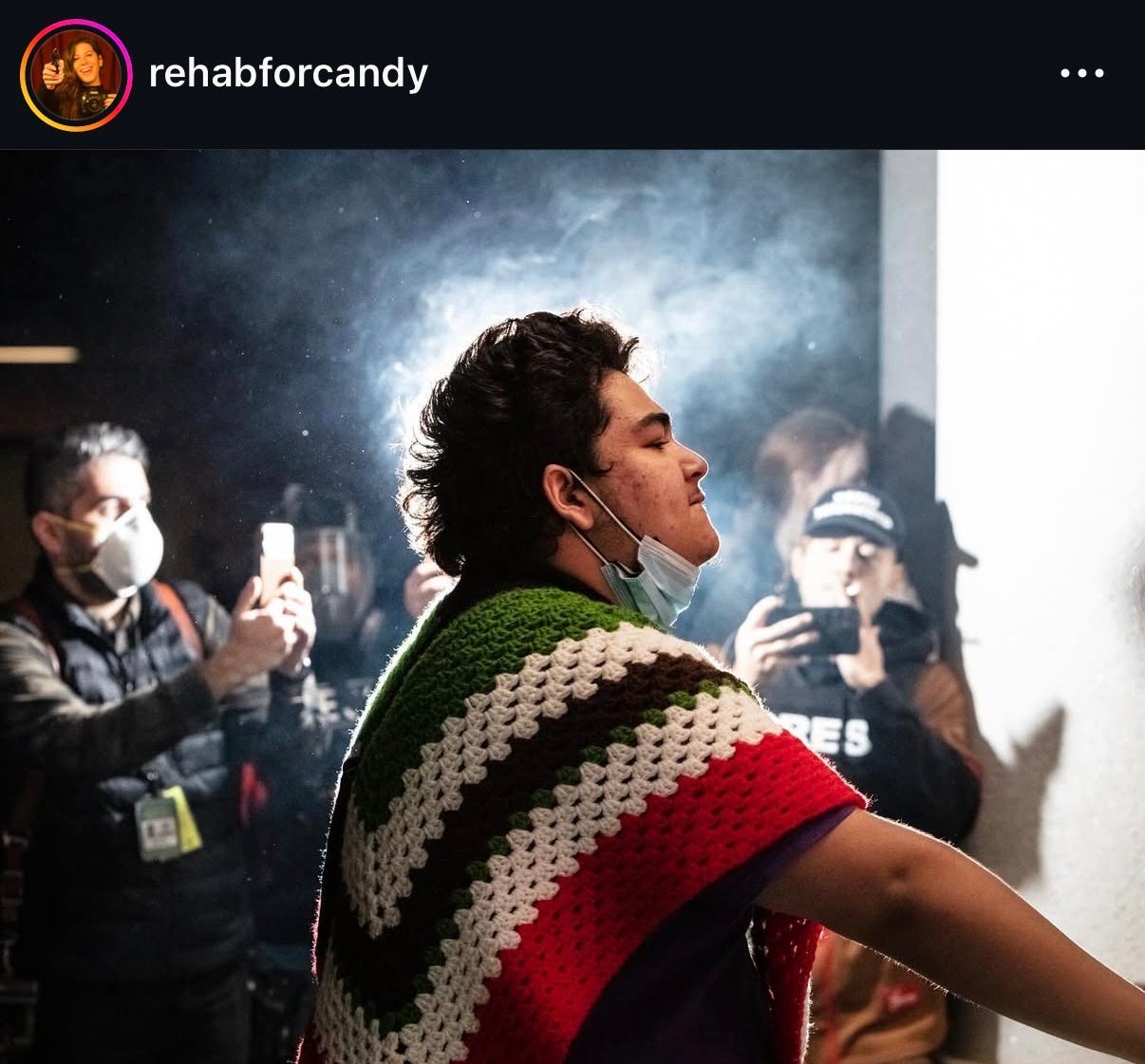
A gorgeous shot aesthetically; the way he’s backlit by someone’s flash (or flashlight?), hazy smoke filling the air — vape smoke? tear gas? sage? — is incredible.
Great symbolism, too. His mask is pulled down, exposing him to whatever that is that he’s breathing in, just as he’s exposed himself to danger by walking forward… his arm is outstretched, out of frame, reaching toward something both literal and symbolic… He’s reaching from the darkness toward the brightness… There are photographers on either side, one photographing him and the other keeping his eye on whatever the DHS officer is doing out of frame, as though the crowd of witnesses is both looking at him and looking out for him…
But I wanted something kind of different. I wanted to capture what it felt like to realize he was walking forward, that moment of noticing that something was happening, a moment where a clearly-symbolic act and a literal one merged, about to change the entire energy of what was happening on that block, a moment in which we all hung suspended, waiting to find out which side of meaning we’d come down on.
It’s not my favorite image I’ve ever captured, technically speaking; it’s so noisy, and I don’t like that you can’t quite see what’s in his hand.
But on the whole, this is the shot I wanted in that moment, and I’m proud of it.
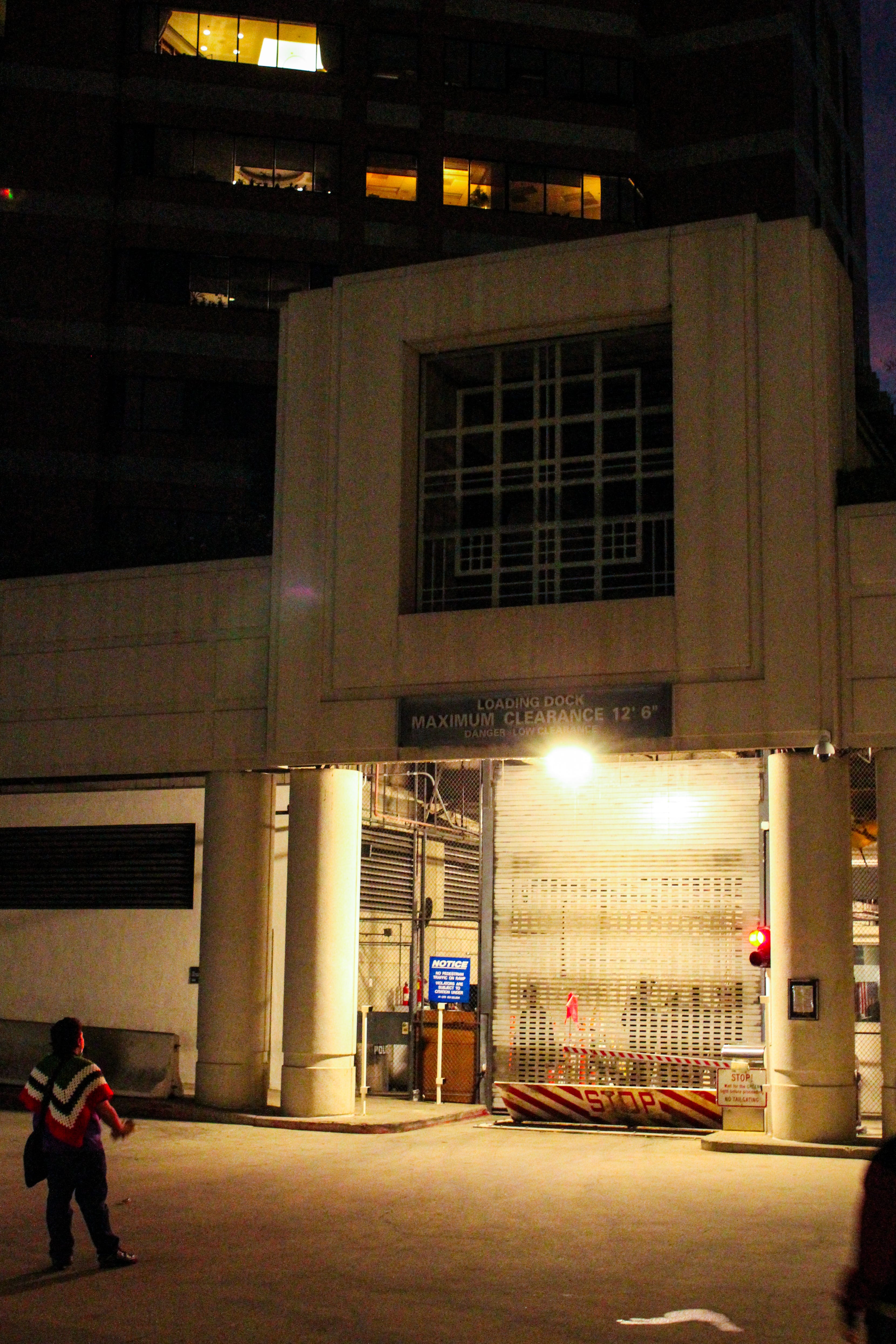
The man kept small against the concrete block of a government building that towers above him… the slightest sliver of open sky still visible, though he’d have to cross the whole image to get there… the shadowy figures behind the gate… the STOP barrier that’s leaning at an angle, as if about to lay down flat… his face lit up by the red stoplight he faces… the blurry hint of someone about to enter the driveway with him…
Me behind the lens, hanging back rather than joining the scrum of photographers who followed him forward…
All literal, but also all symbol, all at once.
And maybe one of the first times I felt in the moment that I was “making” a picture rather than “taking” one, but maybe that’s a topic for a different essay.
Here’s the other symbolic-yet-literal moment that made me stop and have to catch my breath. I went all Rupi Kaur about it, but you’ve gotta let me have this one. You’ve been warned.
how was your weekend?
oh, me?
so that my vision didn’t go blurry,
putting me in danger,
i had to try not to cry at the sight of
a helicopter spotlight
sweeping over a bridge
lit red by police vehicles
illuminating a barbed wire fence
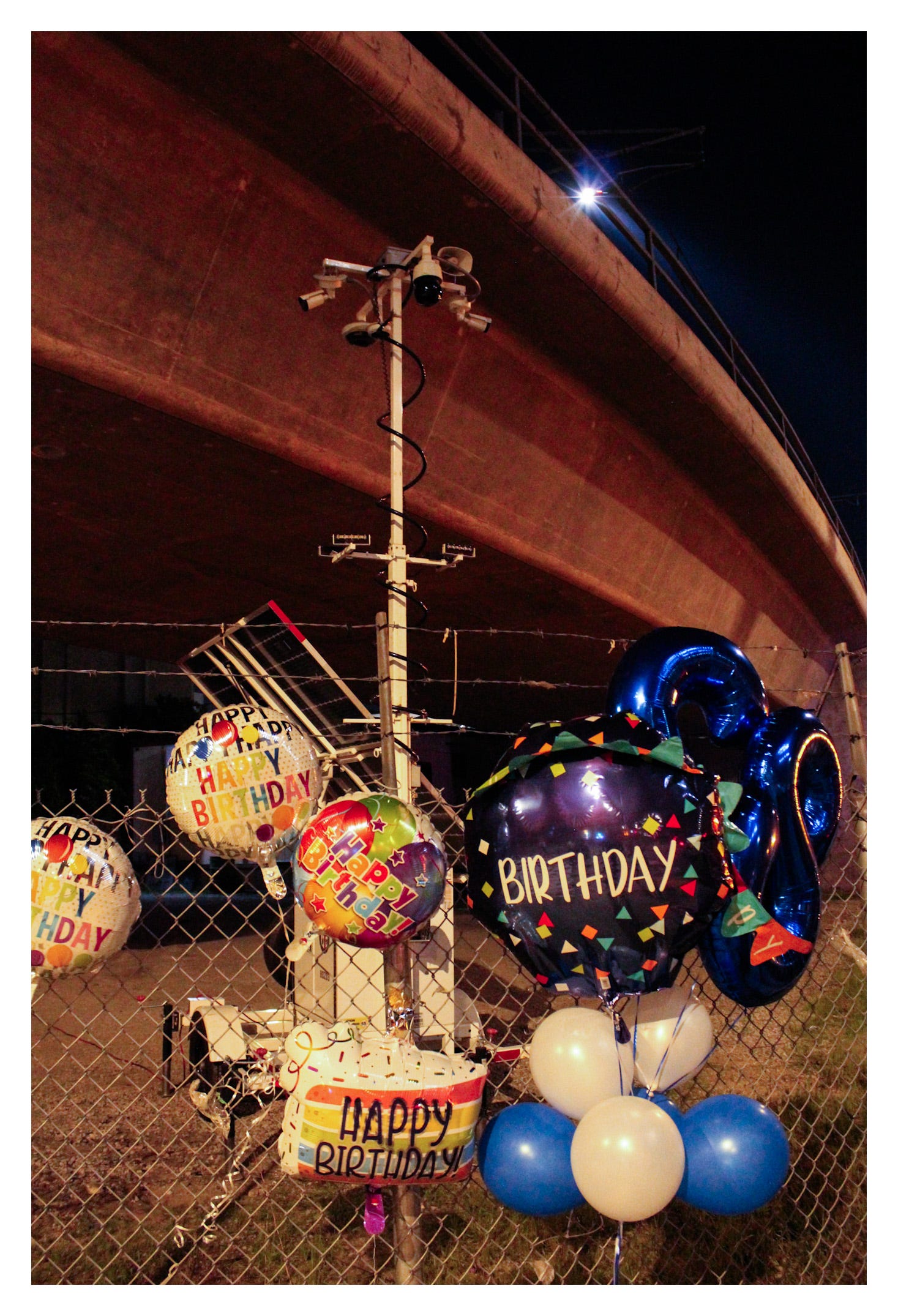
which protects a tower topped with multiple security cameras
and upon the barbed wire fence
people have hung
‘Happy Birthday’ balloons
so that their loved ones inside the concrete building across the street
would know they haven’t been forgotten
if they’re allowed to look out the window
I totally got that symbolism. I think you may have a special talent for spotting symbolism!